
A Global Standard for Premier Reputation, Excellence, and Value
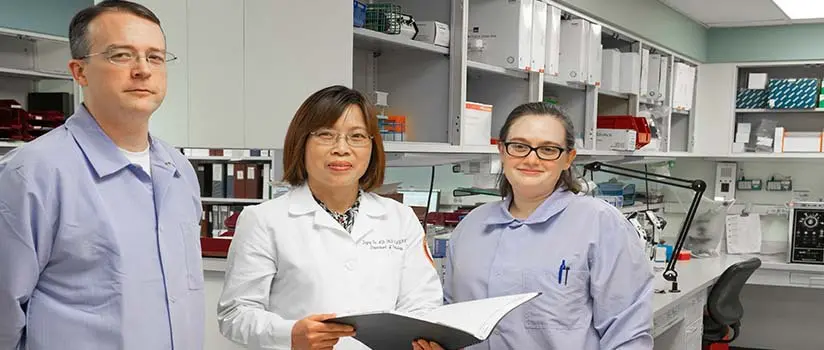
Whether in Dubai, Chicago, Sao Paulo, Munich, or Shanghai, we hold every laboratory to the same high standards. The CAP Laboratory Accreditation Program has earned a worldwide reputation for excellence because we set a high bar with an exclusive focus on laboratory medicine and pathology—but we also support you to make it achievable.
By becoming CAP-accredited, you will realize numerous benefits, including:
- Quality process improvements through our PT/EQA programs (required)
- Greater confidence in your test results
- Laboratory management support and oversight to changes in laboratory medicine
- Risk reduction/mitigation
- Higher competitiveness in the marketplace
In preparation for our first CAP inspection, I’ve seen our day-to-day quality systems improving, a new level of discipline in documentation, and increased mindfulness of our staff to ensure we are following processes.
Shivani Sharma, DCP, DNB
CORE Diagnostics, Gurugram, Haryana, India
What Sets Us Apart: Peer Inspectors and Checklists
Our peer-based inspection model uses laboratory professionals who have been in your position; they understand the challenges and risks you encounter. Rather than simply noting deficiencies, they work collaboratively with you during an onsite inspection and often become a resource of knowledge and new ideas.
Our 21 discipline-specific accreditation checklists serve as a detailed guide, not only for achieving accreditation, but also for leadership and running a high-quality laboratory. The checklists are annually updated, incorporating worldwide best practices and reflecting the most recent advances in laboratory medicine.
Having a set of objective requirements created exclusively for laboratory medicine and pathology — and clear criteria for demonstrating compliance — helps eliminate subjectivity. Both the laboratory staff and the inspectors know what to expect, and our inspectors will help you understand exactly what you need to do to meet the requirements.
Pathology and Laboratory Medicine: Our Commitment, Our Mission, Our Passion
We are experts in laboratory medicine because pathology (anatomic and clinical) is our exclusive focus. While other accreditation programs and quality management systems may review overall laboratory processes, they often don’t address laboratory-specific procedures and lack in-depth knowledge, especially for new and emerging technologies like next-generation sequencing.
We want to help you succeed in ensuring quality patient care and advancing the value of the laboratory within your organization. Our mindset is one of continuous improvement and forming partnerships to leverage all the tools and educational resources of the CAP.
“The CAP serves patients, pathologists, and the public by fostering and advocating excellence in the practice of pathology and laboratory medicine worldwide.”
From the CAP Mission Statement
Getting Started: Our Accreditation Process
We want you to succeed. That is why the CAP provides you with step-by-step guidance, tools, and support. We help your teams understand and successfully complete each step on your accreditation journey.
The first step is participating in CAP PT/EQA for at least six months prior to applying for accreditation. In addition to the insights and quality process improvements you will gain with our PT/EQA programs, this mandatory participation will also make your accreditation journey smoother and help ensure quality from the beginning.
Visit our Accreditation process section to learn more about the key steps to participate in our program and understand more about what to expect.
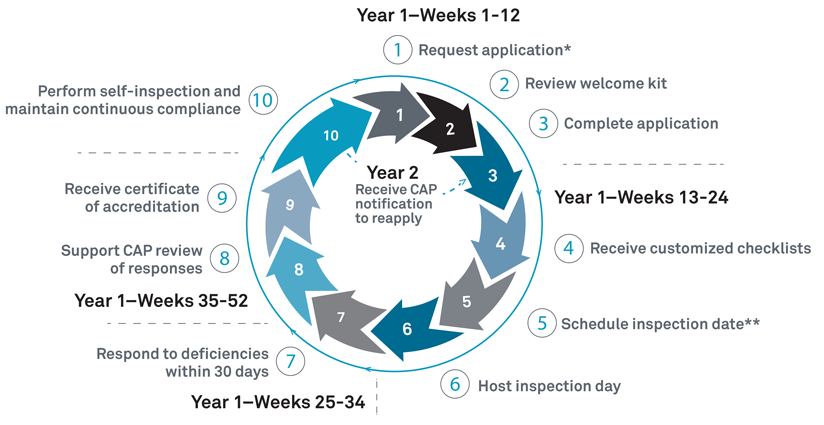
*Laboratories outside the USA and Canada must be enrolled in CAP proficiency testing/external quality assessment (PT/EQA) for a minimum of six (6) months before requesting an application.
**The initial inspection is announced for all CAP accreditation programs. Subsequent inspections are announced and performed within the 90-day period preceding the anniversary date.
What to Expect
The CAP’s accreditation programs provide an engaging, dynamic, collaborative process that fosters an environment of continuous improvement. The program’s peer inspection model, combined with annual checklist updates and year-round education, strengthens each laboratory’s ability to deliver high-quality service that ensures the best patient care possible.
Learn the Steps to Accreditation
From application to completion, we provide the tools and guidance you need so you can focus on what matters most—patient care.
The Guide to Accreditation contains all of the requirements and key processes necessary to become CAP accredited.
Important Requirements for Laboratories Outside the USA
Staffing and Set up
- The laboratory must have a qualified laboratory director.
- The laboratory must enroll in CAP Proficiency Testing (PT)/External Quality Assurance (EQA) for a minimum of six months prior to initiating the CAP application process.
- Each separately accredited laboratory must be enrolled in CAP PT under its own CAP number.
- All disciplines practiced by the laboratory at the same location, under the same directorship, must be listed in the application. All disciplines will be inspected, as the CAP does not accredit portions of laboratories.
Documents Required in English
If English is not the operational language of your laboratory, the following requirements must be met:
- Prior to scheduling an inspection, English language translations of the following documents must be available:
- Laboratory organizational structure
- Instrument list
- Quality assurance/improvement programs
- Quality control programs
- A sample procedure for each laboratory discipline
- Responses to any deficiencies cited at the on-site inspection must be provided in English.
- Certain supporting documentation to a deficiency may be in your native language provided that the key elements that demonstrate compliance, as well as titles and major headings, are in English.
NOTE: The CAP may not be able to accept laboratories located in some geographic regions if there are commercial prohibitions or any other country risks.
Tools and Resources to Help You Prepare
Once you apply for CAP accreditation, you’ll unlock the collection of accreditation resources in our customer portal, e-LAB Solutions Suite (e-LSS), including:
- Online, modular Inspection Preparation Course: Getting Ready for Your First Inspection
- Inspection preparation worksheet, guidelines, and other templates
- Answers to our most common checklist questions
- Recordings of Focus on Compliance Webinars
We have an extended team of specialists who can answer all your detailed questions—from your initial application to inspection logistics, specific inspection questions, or compliance advice. Additionally, we offer a complimentary onboarding call tailored to your specific questions and concerns.
CAP-accredited Laboratories Around the World
Our accreditation program brings together more than 8,000 laboratories in over 50 countries outside the USA. This allows for benchmarking and idea-sharing of quality protocols and standards, including from many of the top globally-recognized institutions.
Use our searchable database to find laboratories and biorepositories accredited by the CAP.
We are proud to share the following news from some of our recently accredited laboratories: