Service alert

Coagulation Topic Center

The CAP coagulation committee's primary resources on coagulation and related topics.

Below are the College of American Pathologist’s (CAP) Coagulation Committee’s primary resources on coagulation and related topics.

Frequently Asked Questions Regarding Activated Clotted Time Cartridge Shortages

The Point of Care Testing and the Hemostasis and Thrombosis Committees discussed the testing alternatives and mitigation strategies in the event of reagent shortages for laboratories and point of care testing (POCT) sites who offer Activated Clotting Time (ACT) testing.

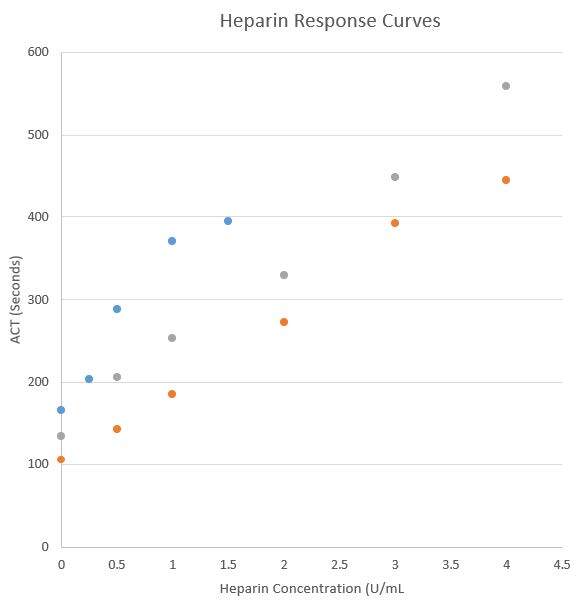
ACT is often needed to support surgeries/procedures where significant and rapid anticoagulation is required, such as coronary artery bypass graft (CABG), coronary stent placements, vascular surgery, extra corporeal membrane oxygenation (ECMO), etc. These procedures often require rapid turnaround time (TAT) and testing options that have wide analytic ranges to support the high levels of anticoagulation.
Frequently Asked Questions

Reference

Falter F, MacDonald S, Matthews C, Kemna E, Cañameres J, Besser M. Evaluation of Point-of-Care ACT Coagulometers and Anti-Xa Activity During Cardiopulmonary Bypass. J Cardiothorac Vasc Anesth. 2020;34(11):2921-2927. doi:10.1053/j.jvca.2020.06.027

Coagulation Surveys – Discussions of Interest

CAP Press Publications

The following publication is available through the CAP Press Publications.

  • An Algorithmic Approach to Hemostasis Testing

CAP Conference XXXVI: Diagnostic Issues in Thrombophilia

This conference addressed four basic questions regarding testing for genetic risk factors for thrombophilia:

  • What tests should be done?
  • When should testing be implemented?
  • Who should be tested?
  • How should testing be done?

Download the Diagnostic Issues in Thrombophilia conference report (2.1 K)

Read a series of related articles on thrombophilia published in the Archives of Pathology & Laboratory Medicine.

CAP Conference XXXI on Laboratory Monitoring of Anticoagulant Therapy

The following articles on anticoagulant therapy were presented at the conference and published in the Archives of Pathology & Laboratory Medicine.

Coagulation Journal Articles

The following articles published in the Archives of Pathology & Laboratory Medicine offer pathologists further focus on coagulation and coagulation-related issues.

Coagulation Case Studies

The following cases studies focus on coagulation-related issues:

  • Coagulation Specimen Handling Issues (2016 CGL-A Survey)
  • Diagnosing heparin-induced thrombocytopenia (CAP TODAY, May 2000)
  • How to work up hypercoagulability (CAP TODAY, January 2000)
  • Addressing clinical etiologies of a prolonged aPTT (CAP TODAY, September 1999)
  • When should low-molecular-weight heparin be monitored? (CAP TODAY, July 1999)
  • Diagnosing antiphospholipid antibody syndrome (CAP TODAY, March 1999)
  • Identifying vitamin K deficiency as the culprit in coagulation abnormality (CAP TODAY, January 1999)

CAP Surveys

The following CAP Surveys on coagulation and related topics along with their product codes are available for purchase:

  • 11-Dehydrothomboxane B2 (TBX)
  • Anticoagulant Monitoring (DBGN, FNPX, RVBN)
  • Coagulation Limited (CGL, CGDF)
  • Coagulation SVM (CGM)
  • Coagulation Extended (CGE, CGEX)
  • Coagulation Special Testing Series (CGS1, CGS2, CGS3, CGS4, CGS5, CGS6)
  • Whole Blood Coagulation (WP3, WP4, WP6, WP9, WP10)
  • Whole Blood D-dimer (WBDD)
  • Platelet Function (PF, PF1, PIA, PLTM)
  • Activated Clotting Time (CT, CT1, CT2, CT3, CT5)
  • Thromboelastogram (TEG)

Join the Hemostasis and Thrombosis Committee

Learn more about our committee activities and how to join the Hemostasis and Thrombosis Committee.