- Home
- Advocacy
- Latest News and Practice Data
- Meet the CAP Advocacy Chairs: PathPAC Chair E. Randy Eckert, MD, FCAP
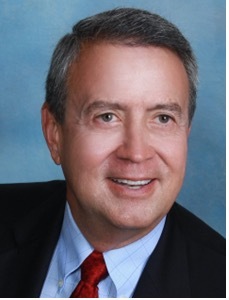
PathPAC is the political action committee established by the CAP in 1992 and dedicated solely to representing pathologists. PathPAC represents CAP members coming together as one and amplifies the voices of all pathologists. It provides the best opportunity to elect lawmakers to Congress that will make fair and reasonable policies towards pathology. Contributing to PathPAC also shows your support for your professional association and the advocacy efforts of CAP members and staff. Learn more!
1. How did you become interested in serving as PathPAC Chair?
Interesting question! After retiring from clinical practice, I decided to utilize some of my free time becoming involved in the activities of the CAP again. I let my interest in helping in any way I could be known to the CAP leadership, primarily through Dr. Emily Volk while she was President. Dr. Jonathan Myles, whom I had worked with previously when I was chair of the Council on Government Affairs (CGPA) and an American Medical Association (AMA) Delegate, reached out to me and asked me if I would be interested in being an advisor on the PathPAC Board. Having been on the PathPAC Board in the past from 1993 to 1999 and serving as the chair of PathPAC from 1997 to 1999, I immediately said “Yes”! After a year on the Board, the CAP Leadership asked me to chair the Board again.
2. What do you hope to accomplish during your time serving as PathPAC Chair?
My goal as PathPAC chair is to increase the number of CAP members donating to the PAC, as well as increase the total number of dollars given to the PAC. Obviously, it would be impossible for one person, even the PathPAC chair, to do that alone, so the entire PathPAC Board will be engaged in the process of educating the CAP membership on why the PAC is so important to the advocacy efforts of the College and, therefore, the importance of giving to the PAC.
3. How does CAP advocacy make a difference in the practice of pathology?
Since becoming involved in the CAP nearly 40 years ago, I have felt that the advocacy efforts of the CAP are the only meaningful efforts being undertaken in sustaining and advancing the practice of pathology. Just like all aspects of medicine, the practice of pathology is subject to the decisions of organizations outside of medicine, most notably those of the third-party insurance companies and the federal government. Through ever-evolving payment practices for medical services, insurance companies and the federal government have an enormous impact on how pathologists get paid for the services we provide our patients. Without the CAP advocating on our behalf, payment for the medical services we provide would be so restrictive that it would be economically impossible for most pathologists to stay in practice.
4. What do you think are the most important aspects of advocacy (grassroots, PathPAC, meeting with legislators, attending the Pathologists Leadership Summit) CAP members need to be involved to move the needle?
I don’t think you can just pick one or two of the CAP advocacy efforts in which CAP members need be involved. I think it takes ALL these efforts to advocate for pathology. CAP members should be engaged in grassroots activities, contribute to PathPAC, attend the Pathologists Leadership Summit, AND meet with legislators. Each of these is important for their own reason, and all are necessary to maximize the CAP’s advocacy efforts.
5. Why did you choose a career in Pathology?
Of all the medical specialties I was exposed to during medical school, pathology was the most challenging and rewarding for me. I knew very early in my medical education that I could make a significant difference in the lives of the patients I would be seeing by being a pathologist.
6. If you could invite three (3) people to dinner (living or dead), who would they be?
Jesus Christ, Abraham Lincoln, my father